


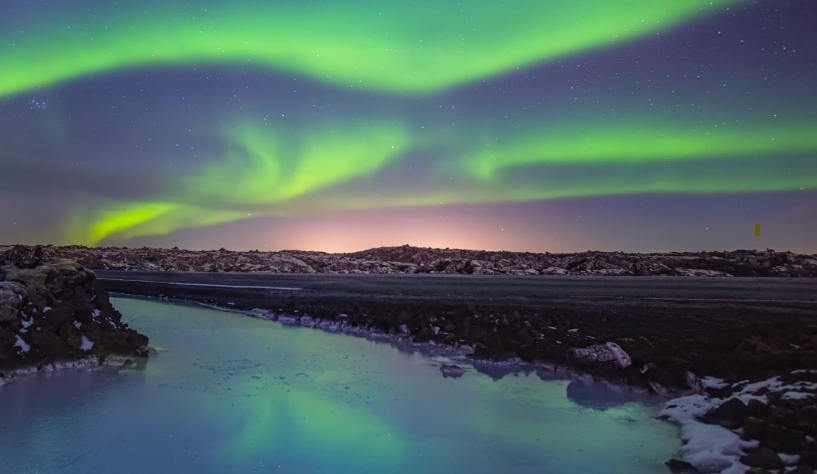
For many travelers, the Northern Lights sit near the top of any “once-in-a-lifetime experiences” list. Iceland, thanks to its location, accessibility, and dramatic landscapes, has become one of the most popular places in the world to see them for the first time.
Yet before booking flights, most people face the same questions:
Is Iceland really easy for Northern Lights viewing? How many nights do you need? Do you have to self-drive to see them?
This guide doesn’t promise guaranteed sightings. Instead, it reflects the real decision-making process behind Northern Lights travel, helping you understand what’s realistic—and what isn’t—before you go.
Why Iceland Is Ideal for Northern Lights Viewing — and Why It Can Still Disappoint
On paper, Iceland is almost perfect. It sits directly under the auroral zone, has low population density, and offers easy access to dark areas once you leave the city. Roads and tourism infrastructure make it possible for regular travelers—not just explorers—to chase the lights.
The challenge is simple: the Northern Lights are not a nightly event.
They require darkness, clear skies, and sufficient solar activity to align at the same time. If even one of those conditions fails, the night may pass quietly.
This explains why some travelers witness dramatic displays on their first night, while others spend several nights waiting. It’s not about technique—it’s about timing and weather.
How Many Nights Do You Realistically Need in Iceland?
This is one of the most common—and most avoided—questions in Northern Lights guides.
Based on real-world experience, staying one or two nights gives you a low chance and relies heavily on luck. Once you reach four to five nights, the odds improve significantly because you allow more opportunities for clear skies to appear.
This is why experienced travelers rarely plan a trip only for the Northern Lights. Instead, they treat them as part of a broader journey—something that might happen if conditions align, rather than a guaranteed highlight.
Do Northern Lights Forecasts and KP Index Really Matter?
If you’ve researched Iceland auroras, you’ve likely encountered the KP index. While it measures solar activity, it’s often misunderstood by first-time visitors.
In Iceland’s high latitude, a KP level of 2 or 3 is already sufficient to produce visible auroras. What matters far more is cloud cover. A high KP with heavy clouds means nothing; a low KP with clear skies can still deliver a memorable display.
A more realistic priority order is:
clear skies first, darkness second, KP index last.
Where Should You Go to See the Northern Lights?
Many travelers ask whether northern Iceland is “better” than the south. In practice, location is less important than conditions.
Downtown Reykjavík isn’t ideal due to light pollution, but driving just 20–30 minutes into darker areas dramatically improves visibility. South Coast beaches, northern towns, and rural inland areas all work—if the sky is clear.
Successful aurora viewing is less about committing to one spot and more about following weather conditions each night. In Iceland, chasing the Northern Lights really means chasing clear skies.
Self-Driving vs. Northern Lights Tours: Which Is Better?
Self-driving offers flexibility: you can leave when conditions improve, stop wherever you want, and stay as long as the lights last. But this freedom comes with responsibility—especially in winter.
Icy roads, strong crosswinds, and near-total darkness are common after sunset. Many winter driving incidents in Iceland occur when travelers head out late at night specifically to chase auroras.
For first-time winter visitors, guided Northern Lights tours are often the safer option. Self-driving works best for those with prior winter driving experience and a solid understanding of local weather conditions. The right choice depends on experience—not ambition.
What If You Don’t See the Northern Lights After Several Nights?
This is rarely addressed honestly, but it matters.
First, it’s important to accept that no one can guarantee auroras. That’s why it’s healthier to treat them as a bonus rather than the sole purpose of your trip.
If clouds persist, some travelers adjust accommodation locations to areas with better forecasts. Others choose not to chase every night and instead focus on Iceland’s daytime landscapes—waterfalls, glaciers, hot springs, and volcanic terrain that never fail to impress.
Often, the most lasting memories come not from the lights themselves, but from the quiet moments spent waiting under a vast sky.
Do You Need Professional Camera Gear to Photograph the Northern Lights?
Not necessarily.
Stability matters more than equipment. A tripod and basic manual settings will capture what your eyes see reasonably well. But it’s worth remembering that no camera truly recreates the experience of watching auroras move across the sky.
Sometimes, it’s better to stop adjusting settings and simply look up.
So, Is Traveling to Iceland for the Northern Lights Worth It?
If you expect certainty and control, aurora hunting may disappoint you.
If you’re comfortable with uncertainty and patient observation, Iceland offers something rare: the chance to witness nature entirely on its own terms.
The Northern Lights aren’t a performance. They’re a gift.
They may not appear but when they do, they tend to stay with you long after the trip ends.