





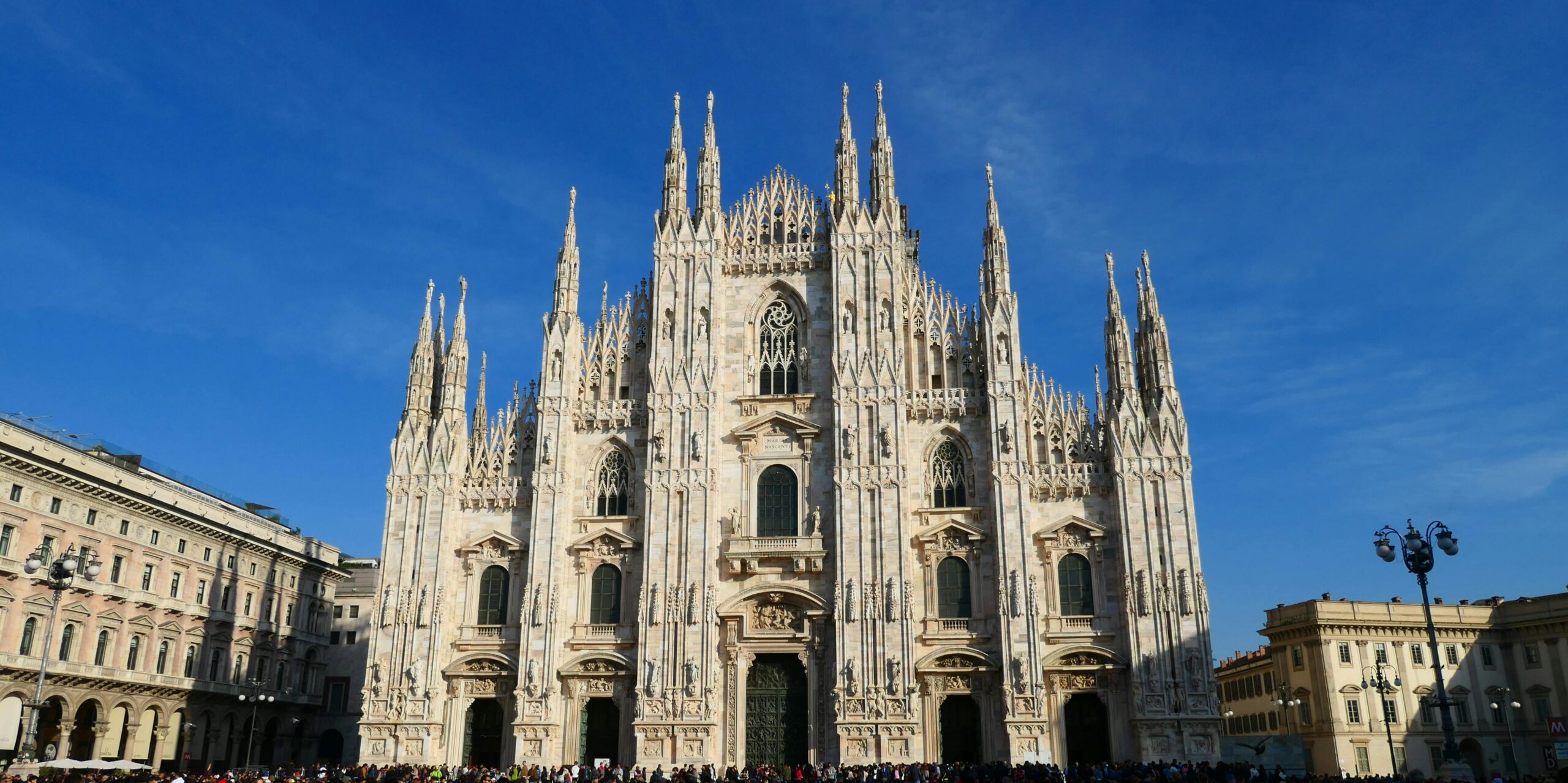
The first time I stood in Piazza del Duomo, I wasn’t immediately overwhelmed.
The cathedral is simply too large. So large, in fact, that at first you don’t quite know where to look.
But once you step closer—once you start noticing the forest of spires and the countless statues—you begin to understand something important:
this is not a finished object, but a project humanity refused to abandon for centuries.
Why would a city spend six centuries building one cathedral?
Milan has never been a calm, stable city.
Founded in the 4th century BC, it has been occupied, destroyed, and rebuilt more times than most European cities care to remember. Romans ruled here. The Holy Roman Empire fought over it. The French, the Spanish, the Austrians all passed through. Napoleon crowned himself here.
And through all of that, the construction of Milan Cathedral—begun in 1386—continued, paused, resumed, and continued again.
At many points, no one could be sure whether the next generation would finish it at all.
Yet it was never truly abandoned.
What you actually see when you stand in front of it
Photographs don’t explain Milan Cathedral very well.
This isn’t a building that wins you over with one perfect angle. It overwhelms you through density.
Too many spires to count
Too many statues to fully understand
White marble that changes color with the light
You look up—and then realize you’ve been looking up for a long time.
Not everyone falls in love with it immediately (and that’s fine)
Here’s something travel brochures rarely admit:
Milan Cathedral is not an instant “wow” attraction.
It asks for patience.
If you slow down and start noticing the details—the mismatched styles, the layers from different centuries you begin to see why it matters. Gothic, Baroque, Neoclassical, and Neo-Gothic elements all coexist here. It’s not perfectly unified, and that’s precisely the point.
This building looks the way history actually works: uneven, interrupted, and unfinished for a very long time.
The five bronze doors are more important than they look
Most visitors walk straight past the bronze doors and head inside. That’s a mistake.
Each door tells a different story, but the central one—the Door of the Virgin Mary—is especially striking. Look closely and you’ll see damage left by World War II bombings. These scars were not repaired.
Standing there, you realize something unusual:
the cathedral does not try to hide its past.
So should you visit Milan Cathedral?
Here’s a clear answer:
If you can visit only one place in Milan, this should be it.
But only if:
You can spend at least 90 minutes
You’re willing to look, not just photograph
You plan to go up to the rooftop (highly recommended)
If you’re short on time or have no interest in architecture at all, you may simply think, “It’s very big.”
One honest final thought
Milan Cathedral may not be your favorite church.
But it will probably be the one you remember longest.
Because it shows something rare:
what happens when generations of people keep working toward something that isn’t immediately useful, profitable, or finished.
And that, on its own, is worth seeing.